Satu ekosistem.
Seluruh workflow influencer marketing.
Temukan KOL, kelola komunikasi, dan urus administrasi di satu ekosistem.
Dapatkan 150+ juta influencers, dalam hitungan menit.
Mulai CampaignMonitoring real-time untuk setiap campaign Anda.
Lihat Fitur
Fair Influence
Satu platform untuk workflow influencer marketing, dari cari KOL, analisis, reporting dan prediksi, semuanya dikemas data-driven untuk decision making yang akurat.
Kunjungi Fair InfluenceCreator Discovery
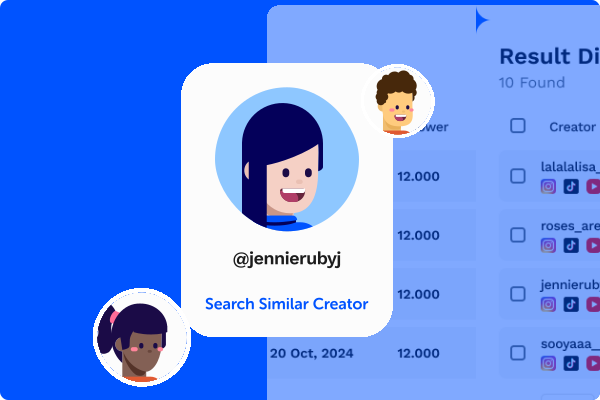
Cari influencers dengan persona yang mirip dengan influencer favoritmu? Tenang aja, kamu bisa cari dengan Similar Creators (melalui By Filter) ataupun di tab By Similar.
Brand Analytics
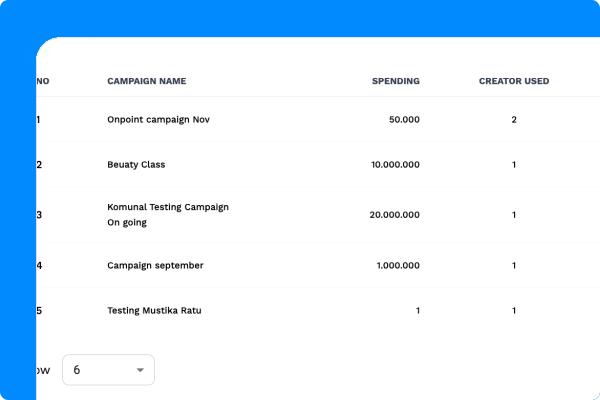
Cek performa keseluruhan campaign dengan campaign breakdown, analisis influencers dan platform di Brand Analytics.
Analyser
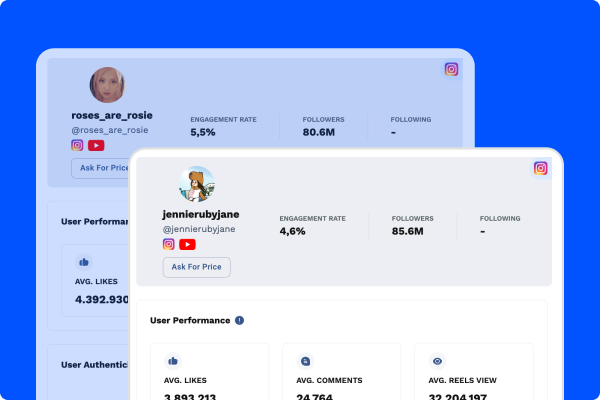
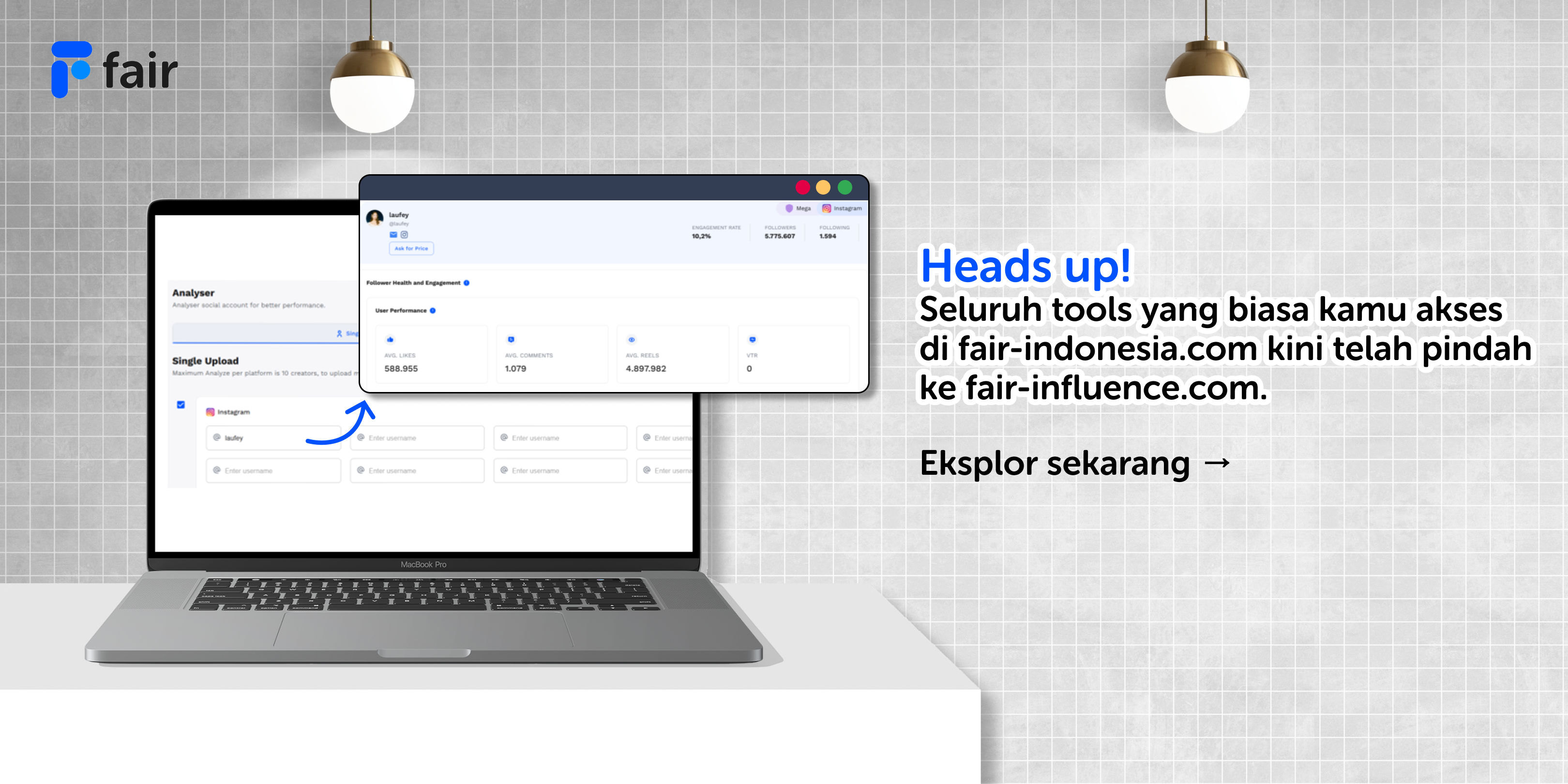
Melalui Analyser, kamu bisa membandingkan 10 influencers sekaligus! Enggak cuma itu – kamu bisa membandingkan 1 influencers yang sama di platform yang berbeda.
Reporting
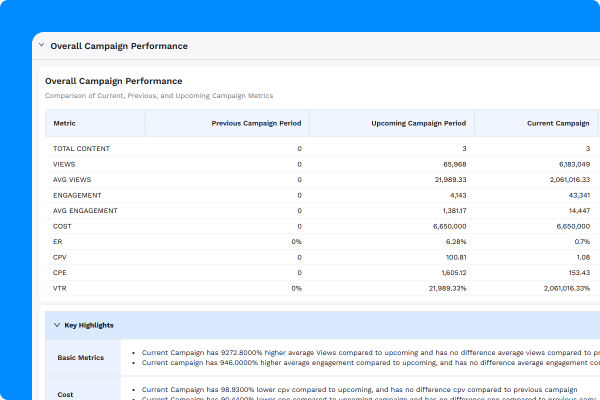
Generate reporting dalam hitungan menit, lengkap dengan breakdown tier, platform, bahkan sentimen untuk cek efisiensi campaign.
Kelola KPI campaign influencer, dari kecepatan listing influencer sampai approval.
Kunjungi Fair SpaceTrack seluruh proses pembayaran, jumlah influencer yang dikelola, dan administrasi.
Eksplor Sekarang
Fair Space
Central operational workspace untuk mengelola seluruh proses pembayaran, dokumen, dan aktivitas harian campaign influencer.
Kunjungi Fair SpaceProject Dashboard
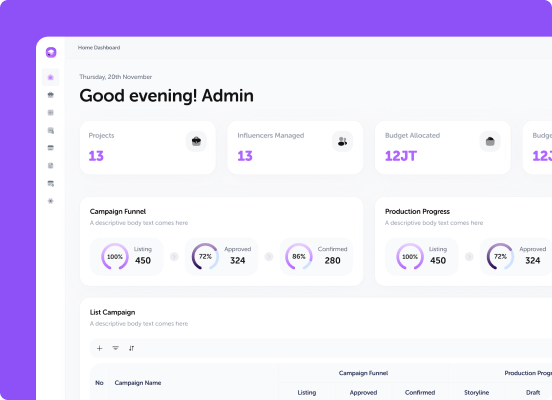
Gambaran umum seluruh campaign, mencakup progress listing influencer, administrasi, sampai pembayaran.
Urgent Request List
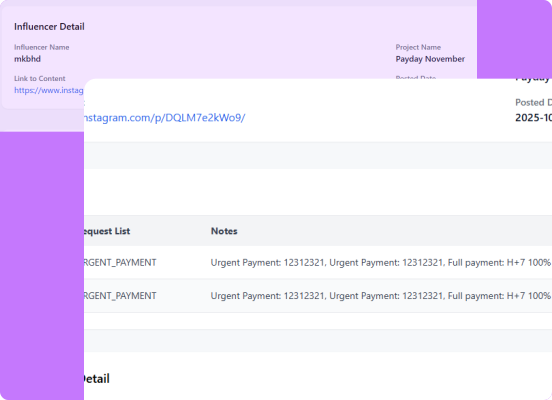
Cek influencer yang perlu dibayar berdasarkan timeline payment dari invoice.
Payment Dashboard
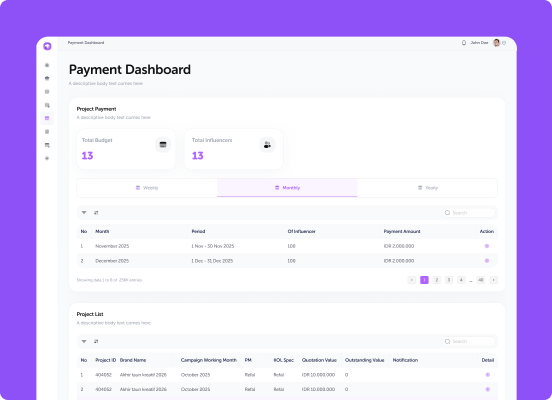
Pantau status pembayaran campaign, mulai dari invoice hingga transfer ke influencer.
Payment Approval
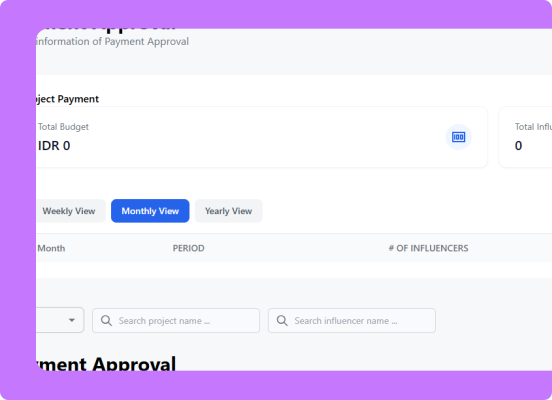
Pantau status pembayaran campaign, mulai dari invoice hingga transfer ke influencer.

Tanpa Fair Space, pengelolaan campaign influencer jadi kacau ketika skalanya membesar

Dengan Fair Space, sistem pembayaran dan operasional yang scalable dan compliant, dibangun khusus untuk campaign influencer volume tinggi
Komunikasi terpusat yang dirancang untuk campaign skala influencer yang banyak.
Kunjungi Fair HubChannel yang terstruktur, users dapat kategorikan berdasarkan campaign level.
Eksplor Sekarang
Fair Hub
Satu sistem komunikasi terpusat yang dirancang khusus untuk campaign dengan ratusan, bahkan ribuan KOL.
Kunjungi Fair HubCampaign Management View
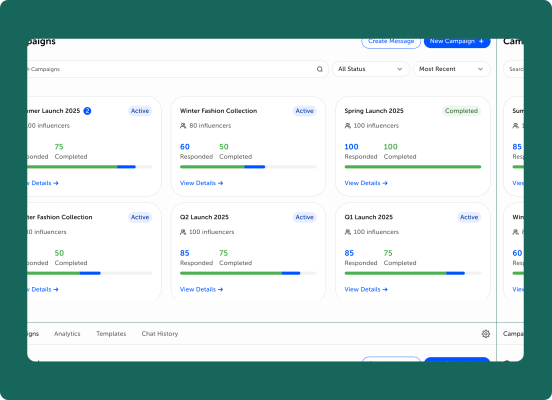
Helicopter view dari keseluruhan chat dengan influencer di tiap campaign.
Campaign Messages
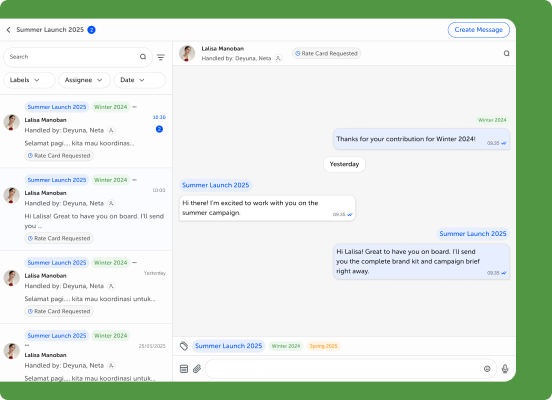
Kirim chat ke influencers dan maintain conversation secara sekaligus, dengan template yang telah disiapkan.
Influencer Profile
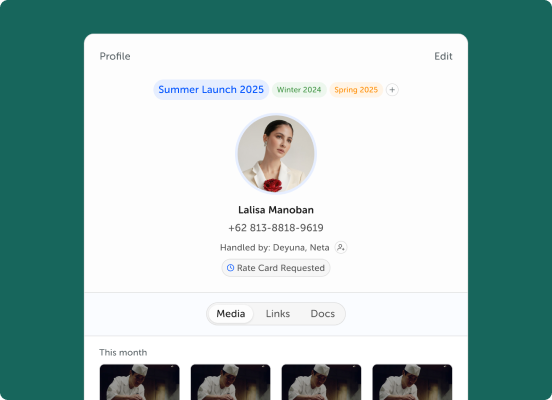
Tiap profile influencer dikategorikan dengan campaign-nya masing-masing serta status progress.
Chat History
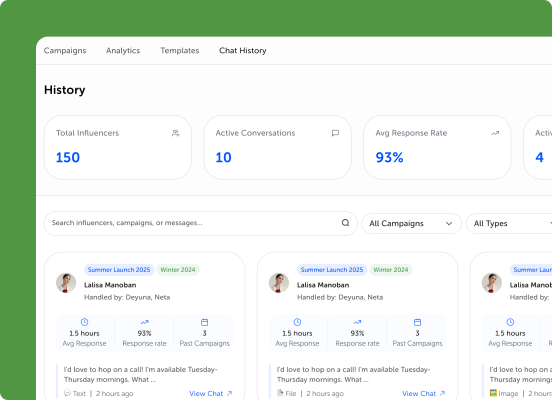
Seluruh riwayat chat terekam dan dapat dicek untuk kebutuhan arsip.